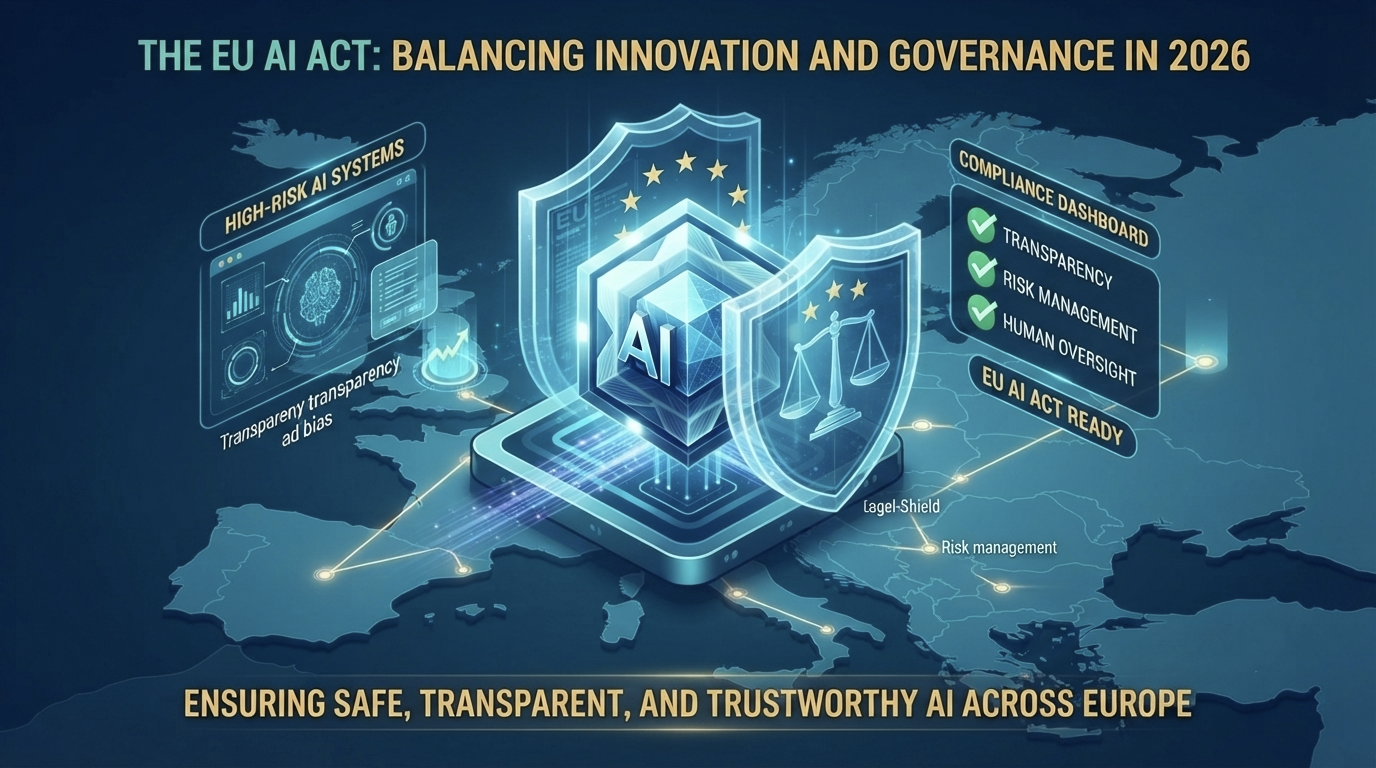
As we move through 2026, the technological landscape in Europe is reaching a critical turning point. While the rise of “Autonomous AI Agents” is transforming how we work and live, the regulatory environment is also shifting. The EU AI Act has moved from a theoretical framework into a fully operational reality, setting a global precedent for how Artificial Intelligence should be governed.
What is the EU AI Act?
The EU AI Act is the world’s first comprehensive legal framework for Artificial Intelligence. Since its implementation phases culminated in 2026, it now imposes strict regulations on AI systems, particularly those classified as “High-Risk.” The goal is not to stifle innovation, but to ensure that AI systems developed or deployed in Europe are safe, transparent, and trustworthy.
Why It Matters for Businesses
If your business utilizes AI—whether through off-the-shelf tools or custom-built agents—you must now ensure compliance. Here are the three pillars of the new mandate:
- Transparency: Companies are now required to provide clear documentation regarding how their AI models are trained and how they arrive at specific decisions.
- Risk Management: Organizations must implement continuous monitoring, bias testing, and robust “human-in-the-loop” protocols to prevent algorithmic harm.
- Accountability: All high-risk systems must be registered and subject to independent audits to ensure they meet European safety standards.
Innovation Through Governance
Many initially feared that regulation would hinder European tech growth. However, the opposite is occurring. By providing a clear “rulebook,” the EU is fostering a stable environment for investment. Europe is currently pouring over €20 billion into the “InvestAI” program and the creation of “AI Factories” to boost local computing power and compete on the global stage.
What This Means for You
For professionals, this shift means that “AI Literacy” is no longer just about knowing how to use a chatbot. It is about understanding Algorithmic Auditing and compliance. As companies scramble to align with these new laws, professionals who understand the intersection of AI technology and legal governance are becoming the most sought-after talent in the European market.
Conclusion
In 2026, AI is no longer just an experiment; it is a fundamental pillar of the European digital economy. By prioritizing safety, security, and transparency, Europe is positioning itself as the leader in “Responsible AI.” Whether you are a business owner or a digital creator, understanding the EU AI Act is the first step toward building a sustainable future in the age of automation.
Sources:
- Context provided in the conversation history regarding EU AI Act trends, compliance requirements, and European investment in AI.
